From School to Neighbourhood: Rethinking School Travel Safety
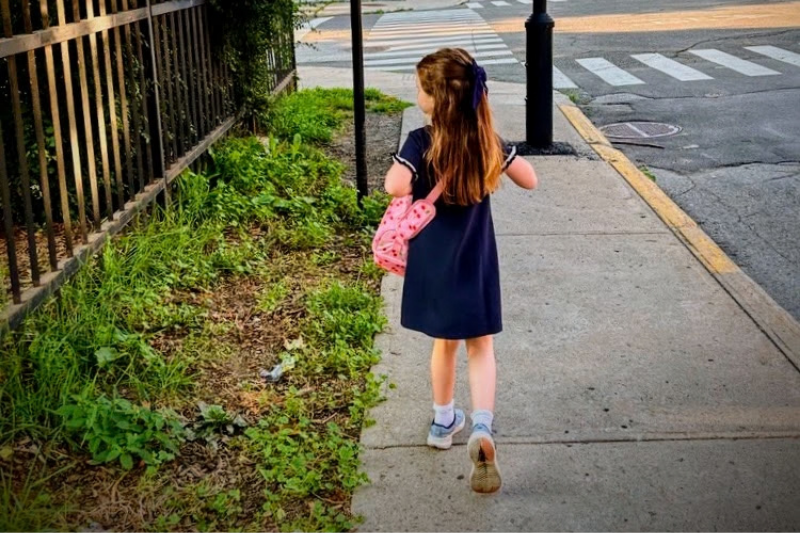
Every day, thousands of young people travel to and from school on foot, by bicycle, school bus, public transit, or private vehicle. Behind these daily journeys lies a complex reality: school areas are among the urban environments where interactions between different modes of transportation are the most intense and sensitive.
For municipalities and school boards, ensuring student safety is not simply a matter of installing a pedestrian crossing or adding signage. It requires understanding user behaviour, anticipating potential conflicts, and designing environments where all modes of travel can coexist safely. It is in this context that Intervia has developed strong expertise in mobility planning, road safety, and the design of safe school corridors. Projects completed over the past five years demonstrate the firm's ability to support communities in initiatives where the safety of young people is a primary concern.
Understanding the Reality of Each School Environment
One of Intervia’s key strengths lies in recognizing that there is no universal solution. Every school has its own reality, urban context, access points, service area, and travel patterns.
This distinction becomes particularly important when comparing elementary and secondary schools.
In elementary schools, travel patterns are heavily influenced by parents. Arrival and dismissal periods often generate a significant concentration of vehicles at drop-off zones, parking areas, and adjacent streets. Younger students have more limited autonomy and perceive risk differently than adults. Key issues typically include pedestrian crossings, drop-off zone management, intersection visibility, speed reduction measures, and conflicts between pedestrians and vehicles performing parking or pick-up/drop-off manoeuvres.
A safe street is not one where users never make mistakes. It is one that remains safe even when they do." – Sylvain Felton, ing., Project Director, Traffic Studies and Transportation Planning
By contrast, secondary schools serve students who are generally much more autonomous. Walking, cycling, and public transit use tend to be more common, while travel distances are often greater. Safety concerns therefore shift toward major roadways, crossings of collector streets and arterial roads, connections to cycling networks, and integration with public transit hubs. Adolescent travel behaviours, which differ from those of younger children, also require tailored design approaches.This nuanced understanding of different user groups allows Intervia to go beyond technical standards and develop recommendations that reflect actual behaviours observed in the field.
Managing the Coexistence of Transportation Modes
Safety around schools depends first and foremost on managing interactions between users.
At any given time, it is common to observe school buses, parents dropping off children by car, students on bicycles, pedestrians, crossing guards, local residents, and through traffic all sharing the same road network. Each interaction may represent a safety concern that must be understood and analyzed as part of Intervia’s studies.
For this reason, our analyses place significant emphasis on evaluating the coexistence of transportation modes. Teams examine, among other things:
- Pedestrian travel patterns; - Cycling routes; - Vehicle drop-off areas; - School bus routes; - Public transit stops; - Traffic volumes and speeds; - Intersection turning movements; - Visibility and readability of roadway design.
The objective is not to favour one mode of transportation over another, but rather to create an environment where each user has a well-defined and safe space. This approach is especially important in dense urban neighbourhoods where available right-of-way is limited and multiple uses must coexist within the same street corridor.
Recognized Expertise in School Corridor Analysis
Over the past several years, Intervia has developed extensive expertise in the planning and analysis of school corridors.
These corridors represent the routes most likely to be used by students travelling to school through active transportation. Identifying them requires a thorough understanding of urban form, transportation networks, and user behaviour.
As part of a recent project in the Greater Montréal area, Intervia conducted a comprehensive study to identify routes likely to be used by students based on desire lines, assess associated risks, and recommend the most appropriate interventions. The analysis led to the definition of five strategic school corridors intended to provide a coherent and safe network for future students. The study also included an assessment of crossing guard requirements, crossing safety evaluations, and recommendations related to signage, pavement markings, and traffic management.
One of the main challenges of this assignment was anticipating future growth in the area and planning adaptive interventions capable of meeting needs for years to come.
From Assessment to Prioritization and Implementation
Experience shows that improving the safety of school travel rarely results from a single intervention. Needs are numerous, budget constraints are very real, and funding opportunities evolve alongside government programs.
For this reason, one of Intervia’s important contributions is helping municipalities prioritize measures based on risk level, safety impact, implementation cost, and technical feasibility. This approach enables decision-makers to develop phased action plans in which the most critical measures are implemented quickly while more substantial projects are integrated into medium- and long-term planning efforts.
The analytical frameworks and classification tools developed by Intervia help maximize the benefits of public investments while facilitating access to municipal, provincial, and metropolitan funding programs.
This phased approach also encourages the implementation of temporary or transitional measures before permanent infrastructure is built. Through pavement markings, flexible delineators, movable street furniture, or tactical urbanism interventions, municipalities can test new street configurations at low cost, validate user behaviour, and measure the real-world benefits of proposed changes. These pilot projects allow communities to refine solutions, gather public feedback, and demonstrate safety improvements before committing to larger investments.
Once proven effective, these measures can be enhanced and permanently integrated into long-term redevelopment projects.
For Intervia, this pragmatic approach is an effective way to reduce risk, optimize available budgets, and accelerate the creation of safer school environments for all users.
A Comprehensive Vision of School Travel
Intervia encourages municipalities to adopt a comprehensive school safety strategy so that consistent measures can be implemented across an entire territory, improving user understanding and simplifying maintenance by municipal services.
In the borough of Rosemont–La Petite-Patrie, Intervia analyzed approximately 40 educational facilities to identify safety needs across multiple school sectors. The team developed a methodology and classification tool that enabled objective comparison between locations and helped prioritize investments where needs were greatest.
Today, this planning approach is part of a broader vision for transforming school environments. In 2026, the borough launched the Quartiers-écoles program, aimed at creating safer, greener neighbourhoods that encourage active transportation. The initiative includes street reconfigurations, traffic-calming measures, school forecourts, and improvements to travel conditions for students and residents, some of which stem directly from Intervia’s analyses.
A Turnkey Approach for Communities
School safety projects must balance a wide range of objectives, including road safety, sustainable mobility, public health, greening initiatives, adaptability, social acceptability, and quality of life.
To address these challenges, Intervia brings together complementary expertise in traffic engineering, sustainable mobility, road design, and transportation planning. This multidisciplinary approach makes it possible to develop solutions tailored to each context, whether for a new elementary school in a developing area, a secondary school located along a major corridor, or an entire school district requiring a review of travel patterns.
Our added value lies in our ability to understand and anticipate the human behaviours behind travel patterns using both available data and information collected throughout each assignment. By simultaneously considering the needs of pedestrians, cyclists, school transportation users, parents who drive, and local residents, we help create environments where safety is not dependent on a single measure but rather on a coordinated system designed for all users.
It is this comprehensive vision that enables Intervia to support municipalities in creating school communities that are safer, more accessible, and better adapted to the needs of current and future generations.